Showing posts with label Lectionary. Show all posts

Thursday, April 28, 2011

I Believe in the Resurrection -- A Lectionary Meditation

Acts 2:14a, 22-32


1 Peter 1:3-9


John 20:19-31


I Believe in the Resurrection


This may simply be the week that follows Easter. We had our great celebration, but now it’s time to get on with business. The liturgical calendar has, of course, other ideas (as does the lectionary). Therefore, let us continue the celebration we began on the Day of Resurrection by singing the songs of resurrection. With contemporary hymn writer Brian Wren we can sing:

Christ is risen! Shout hosanna! Celebrate this day of days.
Christ is risen! Hush in wonder; all creation is amazed.
In the desert all surrounding, see, a spreading tree has grown.
Healing leaves of grace abounding bring a taste of love unknown        (Chalice Hymnal, 222).

And, with St. John of Damascus (8th century), we can sing:

Let the heavens be joyful! Let earth its song begin!
The world resound in triumph, and all that is therein;
let all things seen and unseen their notes of gladness blend;
for Christ the Lord has risen, our joy that has no end.                         (Chalice Hymnal 228, vs. 3).
Yes, it’s not yet time to let go of the Easter song – indeed, the reason that we gather for worship on the first day of the week is that Jesus rose from the dead on the first day of the week.

I realize that this doctrine of resurrection continues to be controversial, with scholars taking positions along a spectrum from bodily/physical to the metaphorical and everything in between. You can pick your theologian/interpreter and go from there. But, as theologian Clark Williamson reminds us, we can’t get away from its message:

The resurrection explains the New Testament; the New Testament does not explain the resurrection. The resurrection is God’s answer to Pilate’s brutality and to the death dealing ways of all oppressive powers and principalities
.
Thus, God chose to exalt him so that every knee should bow and tongue confess him Lord (Phil. 2:9-11). He goes on to write:

When the church affirms that the Christ who was raised still bears the marks of the crucified Jew who died on a Roman cross, it puts us on notice that the risen Christ will not now do anything out of character with what the Jew Jesus did in relation to his followers. As Jesus then confronted his followers with the promise and command of the God of Israel, so Jesus now confronts his followers with the same promise and command. (Williamson, Way of Blessing, Way of Life, pp. 200-201).

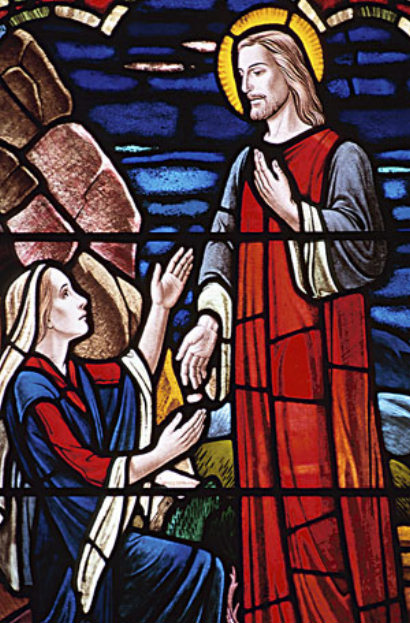
It is this nail scarred but risen Lord whom we meet again in John’s gospel, and through whom we experience the healing presence of God.

On the first Sunday after Easter the lesson from the Hebrew Bible is replaced by a reading from Acts 2, though this passage draws our attention to the words of Psalm 16, the author of which, according to Peter, is David. In this text we hear Peter addressing the gathered crowd on Pentecost, and drawing upon Psalm 16, Peter declares that in this song of the ancient Jewish people, David had declared that the Messiah (the one who would sit on David’s throne) would not be abandoned to Sheol (Hades) or experience corruption, which Peter takes to mean resurrection. David might suffer death and be buried – after all, his tomb remained with them. But the one whom “they” had crucified, God redeemed by raising him from the dead – all of this according to God’s foreknowledge. They may have acted outside the Law, but God had acted to reverse their judgment and restore to the throne of David the chosen one of God. For Peter, David, who died, and whose tomb remained with them, had made it clear that the one who would redeem his throne would be greater than him, for he would be the risen Lord.

If Acts roots the promise of Resurrection in the Psalmist’s prophetic statements, 1 Peter, a letter that claims the great apostle as its author roots the new birth and living hope of the people of God in the resurrection of Jesus. That is, the church doesn’t explain the resurrection – the resurrection explains the church. Therefore, because of this resurrection, the people of God will receive an “inheritance that is imperishable, undefiled, and unfading, kept in heave for you . . .” That promise of the resurrection that the letter speaks of gives hope and strength to those who must suffer trials because of their faith. It enables the follower of Jesus to endure the testing of faith by fire. In the end, strengthened by this promise, they will express their joy in praise and glory and honor. And though you may not have seen him you will be able to love him and believe in him. Yes, because of the resurrection you will experience indescribable joy due to the salvation of your soul.

The text that truly grabs us on this Sunday after Easter is John 20. It comes to us in two episodes, both of which remind us that this resurrection of which we speak was no mere resuscitation, but it also appears to be more than mere metaphor or vision.

In the first episode, the disciples are locked away in the Upper Room, because they’re afraid “of the Jews.” It’s interesting that the Romans executed Jesus, but in John’s view they fear the Jews (even though that too are Jews!). But the point that needs to be grasped here is that they are afraid. This is no jolly band ready to continue the work of their fallen leader, and therefore it would seem to take more than a metaphor to cause them to take on a new calling.

Hiding away behind that heavy door, afraid of their shadows, they experience something unexpected. Jesus suddenly appears – as if he walked through walls. Here’s the piece that fits with Clark’s meditation on the resurrection – he shows them his hands and side and then they rejoice. They are comforted that he’s the one marked by the cross. Because they believe and receive him, Jesus then breathes upon them the Holy Spirit and gives them a commission – forgive or retain sins, for whichever you choose, God will act upon this choice. This is John’s Pentecost, the time in which the Spirit empowers and ordains the disciples to be witnesses. They are given the responsibility to share the word of forgiveness.

But not everyone is there that night. One is missing – Thomas, the Twin. He’s not ready to receive their witness. He’s something of a David Hume. He has to see in order to believe. I’m with him really. I too need evidence to quell my doubts. And so we have the second episode. Again, the group of disciples hunkers down behind locked doors – a reminder that the resurrection message didn’t completely take. They received the Holy Spirit from Jesus, but the Spirit had yet to free them completely from their fears. And once again, Jesus appears – through the door - -and he again says: “Peace be with you.” This time his focus is on the doubter, and he invites Thomas to touch the wounds on his hands and in his side. Touch them so that you might know and believe. Yes, the New Testament doesn’t explain the Resurrection. The Resurrection explains the New Testament! It is the Resurrection that compels the people of God to share the good news. Now, Jesus doesn’t condemn Thomas for his doubts, but he does offer a blessing on those who don’t see and yet believe. We who live after David Hume, should receive this word with joy, for if we’re to take the Resurrection Road, it will require of us great faith and trust.

The Gospel doesn’t tell everything that occurred, but it does tell us enough that we might believe that Jesus is the Messiah, the son of God. If we’re willing to believe this, then there is salvation in his name.

The hope of the church and the world is found in the risen Lord. For as Charles Wesley put it:

Soar we now where Christ has led, Alleluia!
Following our exalted Head, Alleluia!
Raise your joys and triumphs high, Alleluia!
Sing, O Heavens, and earth reply, Alleluia!                                                      (Chalice Hymnal, 216 vs. 4)

Thursday, April 21, 2011

Death and Resurrection! -- A Lectionary Meditation for Easter

Jeremiah 31:1-6


Colossians 3:1-4


Matthew 28:1-10


Death and Resurrection!


As we once again experience Holy Week, we’re reminded that life emerges from death. There is no better analogy of this truth than the transition from winter to spring, which is why it seems appropriate that Easter and the coming of spring coincide. With spring’s coming, the long dormant flowers and trees suddenly come back to life as spring’s warmth replaces winter’s cold darkness. Surely, we can see the parallels between this and Good Friday/Easter.

Now, of course, there are questions to be addressed when it comes to the Resurrection. David Hume has had his way with us, and we must face the fact that people just don’t rise from the dead every day. Therefore, we don’t have analogies that can truly help us grapple with this article of faith. Is it a physical event or a metaphor? The Gospels speak of empty tombs and appearances, and we even have defenses of the event against charges that the disciples stole the body. Of course there are the discrepancies between the various stories as to when and where and how Jesus appeared to his disciples. Did he meet them in Jerusalem or in Galilee (or both?). We can speculate, but that gets us nowhere. Whatever the nature of this reality – and I personally find myself somewhere between Marcus Borg and N.T. Wright – and the nature of the debates, what we hear in these texts of Easter is a call to confess our faith in the risen Lord. It is a reminder that we don’t serve a dead hero, but a living Lord, who shares with us the fullness of God’s everlasting love.

Ultimately we must hear each witness on its own, listening for its voice, and in this case, for this meditation (and for Sunday’s sermon) I will limit my thoughts to Matthew’s testimony – together with that of Jeremiah and the author of Colossians.

Jeremiah doesn’t explicitly speak to Easter -- there’s no promise of resurrection here, but there is a promise here concerning God’s intention to be present with us forever, sharing with us the everlasting love of God. Now this word goes first and foremost to Israel, which must endure the suffering of exile, but here in Jeremiah 31 comes the promise that God hasn’t forgotten them. God promises to be the God of all Israel, even as they have endured the wilderness. The word that comes to Israel (and to us) is that God has loved Israel with “everlasting love,” and therefore God continues to be faithful to Israel. This confession of God’s faithfulness leads Jeremiah to invite the people to pull out their tambourines and begin to dance like merrymakers. Having heard the promise that Israel will continue to be God’s people and that exile is ending, they are invited to celebrate something that is equivalent to life out of death. But not only will they dance, but they will also plant. Yes, merrymaking leads to work. And from there, the call goes out: “Come, let us go up to Zion, to the Lord our God. All of this, however, is but a sign of God’s everlasting love. As I reflect on this truth, my thoughts go to the point made by Rob Bell in his new and controversial book, wherein, he speaks of God’s desire that all be saved–or reconciled. He writes:

History is about the kind of love a parent has for a child, the kind of love that pursues, searches, creates, connects, and bonds. The kind of love that moves toward, embraces, and always works to be reconciled with, regardless of the cost. [Bell, Love Wins, p. 99].

Jeremiah understands this truth – God seeks out and restores the people to the land, and therefore they will rejoice with song and dancing, and also by planting, by taking possession of the land that is promised. This is, after all, an act of love.

We hear the resurrection story from Matthew’s perspective in this lectionary season (unless you decide to go with John’s version). In this version of the story, Mary Magdalene and another Mary go to the tomb, though the reason for their visit isn’t mentioned. As they reach the tomb on this first day of the week, with the Sabbath behind them, they discover that an earthquake has rolled the stone away from the tomb. Now, I know something about earthquakes and generally their not as localized as this report would suggest. Whatever the nature of the quake, the stone is rolled away, and an angel of heaven with a countenance like that of lightening, and the clothes, a dazzling white, sits on the stone – having frightened the guards away. The message of this angel is simple: Don’t be afraid (like the guards?). Instead, hear the message he brings – the one they look for isn’t there, but is instead risen from the dead, just as he had said. Remember, God is faithful! They might not have gotten the message, but God remains faithful, due to God’s everlasting love.

The angel has another message – go tell the disciples to meet Jesus in Galilee. With this command these two women become the first witnesses to the resurrection – at least of the empty tomb. But as they go back to the larger gathering, they receive another visit. This time it’s Jesus himself, and like the angel, he tells them to tell the disciples to meet him in Galilee (where they’ll receive their commissions). It bears repeating here that one of the marks of an apostle is that the apostle is a witness of the resurrection, and thus these two women are to be counted among the apostles of Jesus. Oh, and there’s one other thing about this passage, not only do the women bear witness of the resurrection, but when they meet Jesus they worship him. Matthew says that they grabbed his feet and worshiped him (proskynein). While this could mean an acknowledgment of someone of higher rank, James Dunn notes that in almost every case in the New Testament it’s used in relationship to worship of God or of Jesus (as is the case here) [James Dunn, Did the First Christians Worship Jesus?, p. 10-11].

There’s not enough space here to wrestle with the issue of what it means to say that they worshiped Jesus, but it’s clear that the women are rejoicing at this sign of God’s everlasting love. They can’t help not worshiping this one who was dead and now lives! And is that not the point of Easter – the one who brings God’s everlasting love to us is alive and present with us, so that we need not see ourselves alone in the wilderness?

Finally, our attention goes to this short passage from Colossians 3, where the author (we don’t know if it’s Paul or not), declares that if we’re raised with Christ then we should look for the things that come from above, for that is where Christ is sitting – at the Right Hand of God. The message of resurrection is to consider the things of heaven, rather than the earth. For many of us this command does raise warning flags. We’re all aware of the danger of “being so heavenly minded that we’re of no earthly good.” That is, it sure sounds as if the author of this letter is giving us permission to walk around with our heads in the clouds, but I don’t believe that’s the case. It is, I would suggest a reminder to examine our own sense of allegiance. If you are a follower of Jesus, then you must keep your allegiance with the one who sits at the Right Hand of God. And when he’s revealed then you, having hid your life in Christ, you will be revealed in glory.

Here we are at Easter, being called upon to declare our allegiance to the one whom God has raised to the Right Hand, a God who as Jeremiah reminds us, is faithful to the promise to love with everlasting love. If this is true, if Easter is true, then what is your response? How will you celebrate Easter’s glory?  Will you take out the tambourine and dance for joy?

Thursday, April 7, 2011

Rattling Bones, Living Body -- Lectionary Meditation

Ezekiel 37:1-14


Romans 8:6-11


John 11:1-45


Rattling Bones, Living Body


Spring is in the air – though in my neighborhood the birds have started to come back, but other signs of spring have been delayed by a long winter. The flowers have been struggling to emerge and the trees still aren’t showing much life. Still, there’s enough life here to give us hope that winter will give way to spring, death to life.

As for our journey with the lectionary, Easter has yet to make its appearance, but there are signs that it is close at hand. These signs include this week’s set of texts, which have a strong sense of familiarity – especially the story of the valley of dry bones and the raising of Lazarus. The first story would seem to lend itself to the handiwork of Spielberg and Lucas to bring to film, while when it comes to the story of Lazarus, my imagination is colored by its portrayal in The Greatest Story Ever Told, where Jesus (played very Germanically by Max Von Sydow) raises Lazarus from the tomb, after which the crowd runs to Jerusalem to spread the good news, accompanied by Handel’s Hallelujah Chorus. It’s difficult for the short reading from Romans to stand out in the midst of these two dramatic stories, but it too speaks to the matter of life out of death.

While it might take Lucas and Spielberg to bring Ezekiel’s vision to the big screen, we really don’t need the artistry of the animator to imagine this scene. Ezekiel’s descriptions are vivid and dramatic in themselves. If we’ll let our imaginations loose for a moment, we can go with Ezekiel as the Lord takes him to a valley filled with very dry bones. As we look around at this valley filled with bones that once provided the foundation for life, but now are dead, we hear the question: “Can these bones live?” The obvious answer is: no, they are beyond hope. But, God knows differently, and Ezekiel is told to prophesy to the bones. That is, Ezekiel is told to speak the Word of the Lord to the bones so that they might have life. This command and this scene should send us back to the opening lines of Genesis, where God speaks the world and all it’s inhabitants into existence. The Word brings life, but not only is there the Word, but there is also the Spirit, for the Lord says through Ezekiel: “I will cause breath to enter you and you shall live.” With these words we’re reminded that the Hebrew for breath – ruach – is also the word for Spirit. God says to Ezekiel, let these bones know that I will breathe the Spirit into them and therefore they will have life. And then they will know that “I am the Lord.” With that, the process of bringing life out of death begins with the rattling of bones, and as the bones join themselves together they are joined by the sinews and the flesh and the skin. All is well, but this body is not yet alive. It has all its parts, but it lacks one thing – the breath. And so the Prophet once again speaks, calling for the winds to come from the four corners of the earth to bring life to the body. Might we hear in this a reminder that life – breath – comes to us as a gift of God? We live because God has chosen to provide us with the Spirit.

This word is given to Israel, a nation that has lost its way and its home. It has no hope and no future. It is merely a collection of dry bones scattered across a valley floor. But now things will change. The broken and lifeless nation is given new life. What was dried up and lost and cut off is now once again full of life. Ezekiel then adds a word about the graves, which God has promised to open. Even those in the grave will receive the Spirit and thus will again live on their own soil. And the promise is this: “Then you shall know that I the Lord have spoken and will act.” There is a word here for the church, even the church that struggles for life. The Lord has spoken life back into our dry bones and is ready to put the breath of the Spirit back into this body that was once dry and brittle, so that we might return to the Land and once again stand before God and worship the Lord and bring glory to God.

Ezekiel speaks of dry bones coming to life, whereas Paul contrasts the reality of death versus the reality of life. Death is related to flesh, which the Common English Bible translates as selfishness. Now this simpler translation may reduce the nuances available for our use, but it makes the point we need to hear – selfishness or self-centeredness leads to death. It’s the cause of spiritual dryness (dry bones). The flesh, Paul says, is hostile God and resistant to God’s law. It does its own thing. How often does this define our own lives? But Paul says – that’s not who you are. Because the Spirit (Gk. pneuma, Heb. ruach) dwells within you, you have life. Our hope, Paul suggests, is to be found in Christ who dwells within us (through the Spirit?) And thus, even though the body might be dead, there is life in the Spirit. But if the Spirit of God raised Jesus from the dead, then we can also find hope in the promise that God will give life to our mortal bodies through the Spirit who dwells within us. Of course, isn’t that the promise of Ezekiel? God puts the breath of life back into our bodies – whether that is Israel, the church, or own individual bodies of flesh.

As I noted in my opening comments my perception of this passage is colored by that scene in the Greatest Story Ever Told. How can you picture the raising of Lazarus without the sounds of the Hallelujah Chorus ringing in our midst? Of course, there is more to this story, which appears only here in the Gospels, than simply the aftermath of this miraculous event of death turning to life. There are a number of elements to this story that are intriguing. For one is the fact that this story, which is so powerful, is found only here. The second has to do with the relationship between Jesus and Lazarus – who only appears in this particular story. In this passage we see Jesus get emotional – he weeps and he’s disturbed in his spirit. And he loves this family, especially Lazarus. Considering the fact that the story of Jesus in this gospel seems to be told from the vantage point of the “Beloved Disciple,” could Lazarus be that person? Any answers to this question will be, of course, pure speculation, but it’s intriguing nonetheless.

But, back to the story itself. Mary and Martha, the two sisters of Lazarus, have sent Jesus a request that he come and heal their brother – the one on whom they depend for their livelihood. But Jesus chooses not to respond, at least not immediately. From the way the Gospel writer tells the story, Jesus is almost nonchalant about this request. He seems to imply that Lazarus isn’t really going to die, or at least, that he won’t stay dead. So Jesus stays a couple of days longer while Lazarus apparently gets worse and actually does die. But none of that really matters, because this isn’t about Lazarus’ death, but the opportunity to glorify God. Does that sound familiar? Consider the comment Jesus makes about the man born blind – his blindness isn’t the result of sin, his or his parents, or anyone else. He was born blind for that very moment, when Jesus restores him to sight (John 9:3ff). In this case we see revealed Jesus’ identity as the Light of the World.

Now, once again, we’re in a position to see God be glorified in the life and ministry of Jesus. In the course of the conversation about what is about to transpire – whether they will experience opposition and even death (Thomas seems to think that this is going to happen to them). But Jesus says, don’t worry, because while there is day, then they will experience the “Light of the World.” Another way to put this is – don’t worry because you travel in the company of the “Light of the World.” When they arrive in Bethany, just a few miles outside Jerusalem, they find a large crowd who have come to help Mary and Martha mourn, since Lazarus has been dead four days. Jesus first encounters Martha, who berates him for not coming in time – you could have saved him, she says. But Jesus – Your brother will rise from the dead, to which Mary responds – yes I know he’ll be resurrected at the end of time, but what about now. You could have saved him. In answer Jesus makes another self-revelation: First he is the “Light of the World,” and now he is revealed to be the Resurrection itself: “I am the Resurrection and the Life, whoever believes in me, will live, even though they die” . . . “Do you believe this?” (Vs. 25-26 CEB). To which Martha offers her version of the Good Confession: “I believe you are the Christ, God’s Son, the one who is coming into the world” (vs. 27).

And it’s from there that Jesus moves to the tomb, asks that the stone be rolled away, even though Lazarus is four days dead and in the words of the King James Version: “he stinketh.” But, Jesus ignores the common wisdom and demands that Lazarus come forth, and Lazarus complies, though his feet and his hands are bound, and his face covered with a burial cloth. He is then unbound at Jesus’ request. The response is two-fold. Some believed, and others reported the events to the authorities who begin to plot against him. Yes, from here we go into Jerusalem, where the future holds both death and life.

In three texts we hear a word about death and a word about life. In each of these texts there is a promise – death need not be final. Life in the Spirit will overcome death’s hold on our lives. The question is – are we ready to embrace life? Are we ready to life with boldness and grace? Are we ready for the presence of the Spirit who brings breath to dry bones and dead bodies – including the church!

Friday, April 1, 2011

Open My Eyes that I May See -- a Lectionary Reflection

1 Samuel 16:1-13


Ephesians 5:8-14


John 9:1-41


Open My Eyes that I May See


In the words of that old gospel song we pray that God would open our eyes that we might see God’s will so that we might be set free.

Open my eyes, that I may see glimpses of truth thou hast for me;
place in my hands the wonderful key that shall unclasp and set me free.

Silently now, I wait for thee, ready, my God, thy will to see,
Open my eyes, illumine me, Spirit divine! (Clara H. Scott, 1895)

This is our prayer; that God would give us discernment so that as we make our way through life; that we’ll know what is good and right, decent and holy. It is a prayer that invites us to look inwardly to see where there is light and where there is darkness, for what goes on inside us influences the way we act and react in the world. But, we also seek God’s wisdom so that we might see the world as God sees it, seeing both the light and the darkness that is present in the world.

As we move through Lent, drawing closer to the events that transform the story of Jesus – first the cross and then the resurrection – darkness and light, death and life – our own vision of ourselves and of the world is being stretched. So the question is – are my eyes open to see what God sees.

In the three texts for the day, something of vision and perception is present. There is a word here about discerning the call of God and a word about blindness to the things of God, and in the midst of both there is a reminder that darkness and light are present in our midst.

As we ponder the story of David’s call to be leadership in Israel, his anointing by the prophet Samuel, we are reminded that God looks at things differently than do we. God sees the heart, where too often we simply focus on the surface. We see the good looks and the charisma, but fail to see the darkness that may underlie that charisma. According to 1 Samuel, God had rejected Saul as king. Thus, the spirit of leadership in the community had been removed. Saul was now on his own, without the benefit of God’s guidance. With that removal of the Spirit, God leads Samuel on a quest to find a new king, and so Samuel is sent to the house of Jesse of Bethlehem. When Samuel arrives, the leadership of the town is concerned – Samuel represents the government, or so they believe, and so they want to make sure that he comes in peace. Having assured them that his purpose is peaceful, Samuel invites Jesse to come and share in a sacrifice to God, which seems to be a ruse to confuse Saul, who like Herod centuries later, is concerned about pretenders to the throne.

When Samuel gathers the sons of Jesse, he’s rather impressed with the oldest. He’s strong and tall and good looking. Just what you’d want in a king, but God doesn’t buy it. No, as Samuel prays that God will open his eyes, God gives him a word of advice: “Do not look at his appearance or the height of his stature, because I have rejected him.” No, while mortals look at outward appearance, God looks at the heart (1 Sam. 16:7). Too often we are blinded by what we see on the surface, but God can see below the surface. And so, from Eliab on down to the youngest of the seven sons that Jesse brought before the prophet, no one meets with God’s approval. Finally, frustrated with his task, and seeming failure to see into the heart of the one God had chosen, Samuel enquires of Jesse – do you have any other sons? And Jesse says, just one more, the runt of the litter, the one we’ve sent out into the fields to tend the sheep. You wouldn’t call him, would you? That’s why I didn’t bother to bring him, but Samuel said – go get him, just in case, and when he saw David, he knew. What is interesting in the text is that the outward appearance is noted. He’s ruddy in complexion and handsome. It’s hard to get away from the surface, but while the author seems stuck, God makes the choice, and Samuel anoints David as king, and then the Spirit that had lifted from Saul, settles on David – from that time forward. Saul may still have the throne, but in the eyes of God and Samuel, whose eyes God had opened, David is now the king.

If God opens the eyes of Samuel, God can also open our eyes to the darkness and the light that inhabits our world and our own lives. In the Ephesian letter, we read that while once we were in darkness, now in the Lord we live in the light, so we should live as children of light. The fruit of living in the light, is found in all that is good and right and true. Although the Ephesian letter likely postdates Paul’s life, this sense of living lives that are reflective of the light and not the darkness, reflects in many ways the word given in the Galatian letter, where Paul speaks of the contrast between life in the flesh (not to be confused with the physical life, but an orientation toward pleasing our own urges and desires at the expense of others) and that of the Spirit. I needn’t mention the expressions of the flesh here, but it is worth noting that the life of the Spirit (Light) is expressed in such behaviors and attitudes (fruit) as love, joy, peace, patience, kindness, gentleness, faithfulness, and self-control. Against these Paul says, there is no law. (Gal. 5:16-25). In this particular text, the call is to expose the deeds of darkness by exposing them to the light of God, because everything that becomes visible becomes light. Our prayer then is that we would be discerning, so that we would be able to see that which is good and right and true and live accordingly.

Finally we come to the story of the man born blind. As is true of many of John’s stories, this is a long one, and it has many points of entry, some of which are problematic. We can see in it the debates that are occurring late in the first century between the early Christians and the Jewish synagogues. The Pharisees are the nemesis of Jesus, and the people fear them because they fear being cast out of the synagogue if they name Jesus as the Messiah. As we read this text we need to be aware of this late first century struggle for the soul of Judaism. In the end Judaism and Christianity will part ways, and the result has not always been a happy one. If we can separate out that argument and not see this as pitting Jew against Christian, we can see in it a word opening blind eyes. The word here reflects some of what we see and hear in Ephesians – it is a word about light. In this case, Jesus declares himself to be the “light of the world.” If we want to have our own blindness healed, then we must allow Jesus to provide that healing. In this passage, he takes his spittle, mixes it with dirt, and applies that mud to this man’s eyes, and then telling him to wash his eyes in the Pool of Siloam.

It is interesting that in this story, after the healing, which people question, Jesus is no where to be found. It is only after the man is excommunicated that Jesus appears again and invites him to be his disciple. Again there is much involved here about exclusion from the synagogue, but maybe we can hear another word about our need to wrestle with the call of God. God can open our eyes, but we must still be willing to see as God sees, if we’re to benefit from this healing presence.

As we hear this word from these texts that speak of opened eyes, may we commit ourselves to seeing things as God sees them. If necessary, let us pray that God will bring healing to our own spiritual blindness to the darkness present first in our own lives, and then to the darkness that clouds the world in which we live and serve, knowing that our path must be lit by the one who is “the Light of the World.”

Thursday, March 24, 2011

I'm Thirsty -- A Lectionary Meditation

Exodus 17:1-7


Romans 5:1-11


John 4:5-42


I’m Thirsty

Water is essential to life. The human body is somewhere between 55% and 78% water, and water covers about 70% of the earth’s surface. Although we can go a while without water, eventually we’ll die without water. Water and life – they go hand in hand.

Two of the texts for this Third Sunday of Lent focus on water. Moses has to deal with a people who complain vociferously because they don’t have water to drink, while Jesus finds himself tired and thirsty and sitting next to Jacob’s well. He doesn’t complain, but he does ask for water! As we think about water and thirst we might want to look ahead for a moment to Jesus’s cry from the cross – I Thirst (John 19:28). Paul’s not quite ready to get to the water (Baptism appears in Romans 6), but he deals with the issue of suffering and hope, ideas that are present in the other two texts. Each of these scriptures remind us that no matter how difficult the journey, God is present and faithful.

In the Exodus story, the people have again grown cantankerous. Although God provided food for the journey – not that they enjoyed the menu – now they’re thirsty. This leads to quarreling and complaining to Moses – why, they ask, have you led us out here into the wilderness so that we might die of thirst. You would have thought that they preferred slavery in Egypt, and perhaps they did. We often prefer the misery we know to the potential misery that might face us in the unknown. With all the harping and complaining, Moses grows frustrated with this people God had entrusted to his care. They were never satisfied, no matter what God did – whether it was the rescue from the clutches of Pharaoh’s army or the manna from heaven – they weren’t satisfied. Wanting water they begin to quarrel amongst themselves, and Moses cries to God – “What am I to do with this people? They’re ready to stone me.” As I read this, I’m reminded of political leaders, especially Presidents, who find that they can never satisfy the populace, no matter what they do. It’s never enough!

But God is gracious and hears Moses, telling him to gather the Elders and then go out ahead of the people. God tells Moses to meet at the Rock at Horeb, and there in front of the Elders, Moses does as God commanded. He strikes the rock with the staff he had used to strike the Nile, and from that rock sprang water to quench the thirst of the people. God had provided, but in a bit of frustration, Moses calls this place Masseh and Meribah, because the Israelites “quarreled and tested the Lord saying - “is the Lord among us.” I sense that the word we need to hear in this story concerns typical human behavior – even in the church – in spite of our complaining and insolence, God is faithful. So instead of complaining, let us give thanks to God.

Before we turn to story of Jesus’ encounter with the woman at the well, we must heed Paul’s discourse in Romans 5. The chapter begins familiarly – “Since we are justified we have peace with God through the Lord Jesus Christ, through whom we have obtained access to the grace in which we stand.” In Christ we’re justified, saved, and reconciled. I’m afraid it’s easy to read this passage in a very transactional way. We’re sinners who face the wrath of God, and Jesus’ blood substitutes for our blood. For centuries theologians have interpreted the cross in a quid pro quo fashion – the life of Jesus for my life. But why does God need blood to be satisfied? What is it that I have done that requires the death of another, especially one who is innocent of all changes? I struggle with the idea of divine wrath. I don’t have space to delve into this question here in this place, but perhaps there is another way of reading this text. Maybe the issue is one of separation between Jew and Gentile – in the cross a way has been created that brings the two together. I don’t know, but what I do hear in this text is a promise that no matter what happens there is hope. Suffering, which we all experience, produces endurance, and endurance leads to character, and character builds hope, and as Paul says – this hope doesn’t disappoint. That is because God’s love has been poured into our hearts through the Holy Spirit. That is the message we need to hear – not that we’re miserable sinners who need someone to suffer our due punishment so that God will accept us. No the word we should hear in this text is that God’s love will transform our lives in ways that lead to hope. That is a word of salvation.

Finally we come to the story Jesus’ encounter with the Samaritan woman at Jacob’s Well. According to John, Jesus is sitting by the well because he’s tired. He’s on his way to Jerusalem, where he will taste suffering The disciples have gone into town to get some food. It’s about noon when a woman comes to the well to draw water, and so Jesus asks her to draw him some water to drink, because he’s thirsty. This woman is caught off guard because Jesus is a Jew and she’s a Samaritan (and a woman) so why is he asking her for water? My guess is that he’s thirsty and she has the means to get him a cup of water, but that’s too simple an explanation. The point isn’t the physical thirst, but the spiritual thirst that lies within. The request for water leads to a theological discussion, but first Jesus has to overcome the woman’s literalist mind set, just as he had to do in John 3 with regard to Nicodemus. That’s just the way we are – we think literally first and only later are we able to move onto something more spiritual in nature.

Having asked the woman for a cup of water, Jesus in turn offers the woman living water. At first she can’t comprehend what he’s saying. How can Jesus offer her living water when he doesn’t have a bucket to draw water with. But, when Jesus says that once she drinks this living water she’ll never thirst again, she becomes intrigued. How does this happen? But, besides that, this well belonged to Jacob. How could any other water exceed it in value? Still, water that fulfilled thirst eternally, that was worth pursuing. Having such water would eliminate the need to come to the well. As she’s contemplating this reality, Jesus tells her to go and get her husband. Of course, she’s not married, but apparently he already knows this. In fact, although she’s been married five times, the man she’s with whom she now lives isn’t her husband. Not only is she a woman and a Samaritan, but it would appear that she’s also a sinner, but Jesus doesn’t make anything of that. He seems to understand that she has lived a life of suffering – probably at the hands of the men who have been in her life. Perhaps she has become ostracized, which is why she was at the well at the height of the noon day sun. I don’t know any of this for sure, but it does appear that Jesus has pricked her heart. His revelation of her life causes her to move from her focus on getting water to understanding whom Jesus is.

How do you know this about me? You must be a prophet of God, but then there’s this theological problem. We worship here on this mountain, and you worship in Jerusalem. We’re divided, separated from each other by our theologies of worship. We think God is present here in this place, you think God is some place else. And yet he has spoken truth to her and so she’s intrigued. But Jesus has a surprise for her – place doesn’t matter. It doesn’t matter if it’s Sychar or Jerusalem, Wittenberg or Rome, the point is that God is Spirit and those who would worship God must worship in Spirit and truth. What a freeing thing this word must be, though still she’s not ready to receive it. How often do we resist a word of liberation and freedom? We stay locked within the box that we’ve built for ourselves. The box may have its use once, but now its time to move on, to grasp that God is bigger than the box. The woman who is now a theologian says to Jesus, well when the Messiah comes, then we’ll know what to do. Yes, when the prophet comes who we’re expecting, that person will make this all clear. And Jesus says – “I am he.” I’m the one you’ve been waiting for.

As Jesus makes this claim, the Disciples return to find him deep in conversation with this woman. They’re surprised at all of this. I’m not sure whether this is because the conversation partner is a woman or a Samaritan, but they’re not prepared. This interruption gives the woman an opportunity to return to the village, where she spreads the news about the one who revealed her life to her, and her testimony draws out the people to the well. While she’s doing her evangelistic effort, the Disciples talk to Jesus about the food they’ve procured, but Jesus says – “I have food you know nothing about.” Yes, once again it’s a question of literal versus spiritual. And the Disciples are confused – where did he get the food, but the food he has to offer is spiritual food. As they discuss what to eat, the Samaritans gather around Jesus and invite him to stay a few days and teach them. Afterwards they say to the woman: We no longer have to rely on your testimony, we’ve heard enough to know that he is the savior of the world.

Our thirst is physical, even as our hunger is physical. We are physical beings and we need food and water – whether we’re in the desert of Sinai or at Jacob’s Well. But we’re more than physical beings who need food and water. We’re spiritual beings, who need spiritual food and spiritual drink. Each week, at least in my tradition, we gather at the table of the Lord and take bread and cup. It’s not enough to stave off our physical hunger and thirst, but it is a reminder that our hope is found in the one whom we worship in spirit and in truth, the one who is faithful and who provides what we need, so that we might grow into people of hope.

Wednesday, March 16, 2011

Moving on Up -- a Lectionary Reflection for the Second Sunday of Lent

Genesis 12:1-4a


Romans 4:1-5, 13-17


John 3:1-17


Moving on Up . . .

You can’t see the Kingdom of God without being “born from above.” So says Jesus to Nicodemus (John 3:3). That phrase “born from above” might be a key to understanding the journey of faith. We are by nature physical beings, but by grace we become spiritual beings. By faith we are enabled, as we allow the Spirit, who like the wind, blows where it likes, without us being able to control it. If we’re willing to allow grace to bless us, then our lives might be transformed so that we can participate in God’s work of transforming the world that God loves. If being part of the realm of God means being “born from above,” then most assuredly the path of faith is an upward track. While this path may lead upward, it needs to be said that most often it first goes into the valley.

In approaching these three lectionary texts for the second Sunday of Lent, my thoughts are being pushed in interesting directions from my concurrent readings in Richard Rohr’s Falling Upward: A Spirituality for the Two Halves of Life (Jossey Bass, advanced proof). Rohr speaks of the reality that faces us all – that we will fall before we rise.

So we must stumble and fall, I am sorry to say. And that does not mean reading about falling, as you are doing here. We must actually be out of the driver’s seat for a while, or we’ll never learn how to give up control to the Real Guide. It is the necessary pattern. (P. 66).
The journey we are taking, should we chose the way of the Spirit of God, won’t be an easy one. Consider the journey of Abraham and Sarah, after God calls him. Yes, he receives a promise and a purpose, but it’s not all smooth sailing. God calls Paul on the Damascus Road, he’s blinded and then healed, but it’s not all smooth sailing for him either. As for Jesus, he hears the call and takes up the mantle of God, but his path leads to a cross before it leads to resurrection. Suffering is part of the course of life. We must go down, in order to move up. The cross comes before resurrection. If we’re to experience the fullness of God’s promises we must understand this reality.

Our journey starts with a promise to Abram. God says – go to a new country and I’ll make for you many descendants and you we’ll be blessed so that you might be a blessing to the nations. That’s pretty good news, but it demands a sacrifice. Abram must leave behind his home and his family in order to receive the blessings. But Abram went by faith. But, he doesn’t go alone. In this particular set of verses, we don’t read Sarai’s name, but this is a partnership. There will be no descendants without her. The promise made to Abram and Sarai is really one of the most important statements in scripture, because it sets the context for the rest of the story. Christians come into the story as heirs of the promise to Abraham by grace, for we are not direct descendants of Abraham and Sarah. But then again, as we’ll see, even Abraham and Sarah and their descendants don’t earn this promise, but instead receive it by grace. It is grace that enables them to receive the call of righteousness by faith.

In many ways Romans 4 is a commentary on the Genesis 12 passage. According to Paul, the call of Abraham is not something that has been earned. Abraham is our ancestor, not because of works, but simply because Abraham believed God. Now what does this mean? “Abraham believed God.” Does that mean that God gave Abraham some kind of ordination exam with a set of questions that needed proper answers lest he be rejected? That doesn’t seem to be the case. Abraham isn’t justified – made right before God – because of the Law. Remember the Law doesn’t come until later. No, it’s a matter of faith, and again faith isn’t assent to a set of doctrines, but is simply trust. Abraham heard the call to leave behind family and friends and security so that he could follow God’s lead into Canaan.

It’s important that as we hear Paul place the Law behind Faith, we don’t hear him denigrate the value of Law. For Paul the Law its place, but it’s not the end game. Again, turning to Richard Rohr, who speaks of life’s two halves, the first half has to do with identity formation and security. It’s a question of ordering one’s life, and most assuredly the Law helps with this task. In the second half of life, we can begin to take risks and journeys beyond secure boundaries, but as Rohr suggest, “maybe they cannot answer a second call because they have not yet completed the first task.” He then goes on to write:

Unless you build your first house well, you will never leave it. To build your house well is, ironically, to be nudged beyond its doors (p. 23).
We have to fulfill at least a large part of the first half tasks before we’re ready to move on. Apparently Abraham was ready to take the next step. So was Paul. The point is, that if adherence to the Law is all that is required, then faith is of little value. If Law is the end, then what we have is a rather risk-averse life. The Law has its place, for as Rohr writes, “without law in some form, and also without butting up against the law, we cannot move forward easily and naturally” (p. 25). To live by faith is to take that step outside the doors, to butt up against the walls that try to keep us inside, and being to fly, to test the waters, and live by the Spirit.

This brings us to the gospel lesson from John. The text itself doesn’t speak to the Abraham paradigm that is present in the two texts from Genesis and Romans, but John pushes us to think outside the box. Nicodemus comes to Jesus, seeking wisdom (we would assume), but Jesus throws him for a loop with his talk of being born from above if he should want to see God’s kingdom. Like most of us, Nicodemus is thinking in very material terms. How can I be reborn from my mother’s womb? But, Jesus is speaking in spiritual not material terms. He’s moving beyond the first half concerns of rules and boundaries and identities to the life in the Spirit, where we test boundaries and allow God to move in and through us so we might reach our full potential as God’s children. Jesus first says – if you want to see the realm of God you have to be born from above – that is, born from heaven. Then he ups the ante, and says – if you want to enter the Kingdom then you will have to be “born of water and Spirit.” Traditionally, this phrase has been taken to refer to baptism, but I’m convinced that in context the point isn’t baptism, but rather a contrast between physical birth (water) and spiritual birth. Both are necessary, for we are born of the flesh, but if we’re open then we can also be born of the Spirit as well. To enter the kingdom we must experience this spiritual birth, and when it comes to the Spirit, the wind blows where it will. We don’t control it, and it will push us outside the box.

In this conversation, as John tells the story, Jesus moves onto a discussion of what it means to fall upward. No one has ascended to heaven, he says, except the one who has descended from heaven – the Son of Man. But the one who has descended must be lifted up, even as Moses lifted up the serpent, so that whoever would believe might have eternal life. And what does it mean to believe? Again, I don’t think it means signing on the dotted doctrinal line, but rather trusting in the one who seeks to take us on a journey of faith – the Spirit of God. Our hope lies then in the one sent by God who loves the world, so that whoever trusts in the one God has sent might not perish but have eternal life, which as Richard Beck notes, may have less to do with quantity of time as it does with quality of life in God.

The question that these texts raise concerns whether we’re ready to move on up into the heavenly realm? Are we ready to follow the Spirit and live outside the box? Have we formed/been formed in such a way that our identities are secure enough that we can leave the nest and follow the Spirit into new opportunities to be in partnership with God in loving the world? And we do so by faith, knowing that the wind of the Spirit blows where ever it wills!


Friday, March 11, 2011

Temptation -- a Lectionary Meditation

Genesis 2:15-17, 3:1-7


Romans 5:12-19


Matthew 4:1-11


Temptation

“There are several good protections against temptation, but the surest is cowardice.” (Mark Twain)
Two stories of temptation lead off the Lenten journey, reminding us that temptation is an ever present challenge. Though, as Mark Twain notes, there are ways of dealing with temptation, the most effective being – run for the hills! Or better yet, never take risks, and you’ll not have to deal with problems such as this. But if we want to live fully and put ourselves in a position to grow and mature in our faith, then we must face the prospect of falling prey to temptation. It is, in fact, the central theme of the biblical story. Richard Rohr writes:

It is not that suffering or failure might happen, or that it will only happen to you if you are bad (which is what religious people often think), or that it will happen to the unfortunate, or to a few in other places, or that you can somehow by cleverness or righteousness avoid it. No, it will happen, and to you! Losing, failing, falling, sin, and the suffering that comes those experiences – all of this is a necessary and even good part of the human journey. [Richard Rohr, Falling Upward, (Jossey Bass, proof copy), p. xxii]
It is important that as we take in these stories that we not forget that falling down is part of the journey, but growth comes as we get up and move forward in the presence of God. In this week’s lectionary readings there are two stories of temptation – one referring to Adam and Eve and the other to Jesus. In the middle we come across Paul’s meditation on sin and redemption – through one man sin comes into the world, through the second man its effects are overcome. In Genesis God puts a tree into the middle of the garden and says – don’t eat or you’ll die. In Matthew, Jesus is baptized by John and then is immediately driven into the Wilderness by the Spirit so that he might be tested. Are we ready to be tested? That is the question.

In the first story God puts a man in the garden and tells him to till it and tend to it. He can eat of all the trees in the garden, except one, and if he eats of this Tree of Knowledge he’ll most assuredly die – though Genesis doesn’t tell us how this will occur (Gen. 2:15-17). But, as you read this warning, you have to know that something untoward is going to happen. You can’t put a tree in the middle of the garden that has really good looking fruit on it and then say – don’t eat. You know he’ll eventually bite into the fruit. With this warning in place, the lectionary guides have us skip over the section where God creates the woman as the man’s companion, and takes us to the encounter between the woman and the Serpent, who according to the writer of this text is the craftiest of God’s creations. Note here that the reference isn’t to the devil, though later interpretive tradition will make this connection. The Serpent says to the woman: “Did God say, ‘You shall not eat from any tree in the garden?” Of course, God didn’t say anything of the sort. God said you have all that you need, so stay away from that tree in the middle of the garden. If you eat it, you will die. The woman knows the truth and responds accordingly. But the key to the discussion is the suggestion by the Serpent that the reason God doesn’t want them to eat of the fruit is that upon eating it they will be like God, knowing both good and evil. The Serpent promised wisdom, but God asked for trust, trust that was quickly broken. And upon eating the fruit, the eyes of both are opened and they discover that they are naked, and so they cover themselves with fig leaves. Yes, shame enters the picture and the two whom God created to be companions are now alienated from each other. And as the story goes on, they hide even from God, suggesting that alienation from God had also crept into the picture. While we talk about sin here, the real issue is one of broken trust. But, as Rohr points out – that is part of life. The question is – how will we respond to the realities. Will we get back up and seek reconciliation? Will we allow that original trust to be restored?

Before we turn to Matthew’s temptation story, we turn to Romans 5, where Paul talks about the consequences of the man’s transgressions. Although the woman is often blamed for the Fall, Paul is of the mind (maybe it’s his chauvinism) that the man is responsible. Of course, Paul is also concerned about creating a parallel situation. Adam is seen as the one who breaks trust with God, and therefore allows for sin and death to enter the picture. The passage opens with one of the most pregnant verses in the New Testament. Taken literally it seems to give support to the doctrine of original sin. Paul writes that it was through a man (Adam) that death came into the world because of sin, and death spread to all humanity because all sinned. Paul is reaching back to Genesis 2-3, and offers his explanation as to why sin is so prevalent and why death is experienced by all. Because of Adam we all die, and the culprit has traditionally been seen as original sin. We sin because of Adam and we die because of him. It seems so genetic, but not so fast. Note that Paul says that death spread to all because all sinned, not because the man sinned. Sin was present since the beginning of human history – that is the implication of the text, and it has had devastating effects. It is also clear that sin is not simply disobedience of the Law, because sin and death existed prior to Moses.

The key point in all of this is the role that Adam (the man) plays in the story. Paul says that Adam is the type of the one to come. And while sin and death was introduced into the world through the actions of the first man, through the work of the second Adam (Christ) comes grace. Thus, if many die because of the first man’s sin (setting the world in motion toward disobedience), so in the second Adam’s obedience this is turned around. In a statement that almost sounds universalist in intent, Paul says that “because of the one man’s trespass, death exercised dominion through that one, much more surely will those who receive the abundance of grace and the free gift of righteousness exercise dominion in life through one man, Jesus Christ (Rom. 5:17). We must face the reality of sin – however it may have come into the world – but the good news is that in Christ its effects have been overturned. Forgiveness is ours.

When we read Matthew’s Temptation story, it’s easy for us to discount the threat to Jesus’ identity. We just assume, or at least many assume, that Jesus is divine and therefore there’s really nothing to be concerned about. It’s all just a test, to which all the answers have already been given. There’s really no chance that Jesus would actually have failed or fallen. But if we take such a view. If there’s nothing really at risk in the incarnation, then what’s the point? Is it a mere exercise for our enjoyment? Is the devil too stupid to know that Jesus couldn’t fall, so God was having a good laugh? If these tests are real and God’s purpose could have been thwarted, then Jesus is – in Paul’s terms – the Second Adam. In his obedience he shows us the way to rebuild trust; how to walk in righteousness. But as the story goes, the devil gave it his best shot, but it wasn’t good enough. The temptations were truly seductive. Bread to end hunger; a spectacle to draw followers; rule over the world in exchange for a small bow. And yet in each case, Jesus stood strong in the Spirit. Jesus chooses to live by the words that come from the mouth of God; chooses not to put God to the test; and Jesus chose to worship God and not the devil. In the end the devil goes away, and the famished savior is tended to by the angels. It is in the obedience of the Second Adam that the disobedience of the First Adam is reversed. But obedience is more than playing it safe. Obedience involves taking necessary risks so that one might grow in faith and practice.

Temptation is part of life. We will fall, lest we believe that perfection is something to be guarded to such an extent that we’re not willing to live life in the presence of God. That is not, I believe, what God calls for us to do. It is in reality the way of death and not life. Let us then pursue God’s purpose for our lives, by living boldly in the world.

Thursday, March 3, 2011

On the Mountain with God -- Lectionary Meditation

Exodus 24:12-18


2 Peter 1:16-21


Matthew 17:1-9


On the Mountain with God

I grew up in the shadow of the Cascade Mountains. From the age of 3 to 9 I lived at the foot of one of the great mountains in America, the majestic Mount Shasta, a 14,160 foot double coned volcano that exudes mystery. I never climbed Mount Shasta, but I have climbed a few other shorter Cascade peaks, and so I understand the draw that mountains can have on people. There is something powerful and awe-inspiring about standing at the top of the mountain and looking out across the landscape. You see the handiwork of God very differently from high up in the mountains, standing above tree-line, where nothing is able to take hold except a few of the hardiest plants. The air is thin, cold, and clear. You feel as if you can touch the sky and even reach through the thin membrane separating heaven and earth and touch the things of God.

From my own experience living among the mountains I can understand why people from time immemorial have gone to the mountains to encounter God. In the biblical story, we see people going to the mountain, from Moses to Elijah to Jesus, and there upon the mountains God is encountered, and lives are changed. In this week’s lectionary texts we go to the mountains to meet God. With Moses we go into the presence of God on Mt. Sinai, and with Jesus we go to the mountain where he is transfigured before our eyes and God speaks to him from the cloud of presence.

We begin with Moses who receives a call from God to go to the mountain and receive the tablets of the law, which God has written for their instruction. And so he takes Joshua, and after leaving Aaron and Hur in charge, heads for the mountain. As Moses climbs the mountain, a cloud begins to envelope it, so that the “Glory of the Lord settled upon Mount Sinai.” They wait, presumably on the edge of the cloud for six days. On the seventh day, with the Glory of the Lord sitting on the mountain having the appearance of a devouring fire, God invites Moses to enter the cloud. As I read this description I have in mind the forest fires I remember seeing coming down the side of Mount Shasta as a child. They were far enough away that I didn’t have to worry, but the flames were large enough to get your attention. You can imagine the feeling of the people down below. Moses and Joshua have gone up the mountain, which is now engulfed in flame. Will they ever return? What will happen to us? Yes, I can only imagine. But then, Moses went up into the cloud and ascended the mountain, and there he spent forty days and forty nights. With this the passage ends – though if you continue reading you discover that it is in this forty day period that God reveals to Moses God’s desires for the people of Israel. All the directions for the creation of the Tabernacle and ordination of priests and more are revealed, as Moses is with God on the mountain.

Most assuredly Moses is transformed by this encounter with God, though we later learn that when Moses emerges from the cloud his face shines so much that he must keep himself veiled. Paul suggests that over time the glow faded, but Moses kept the veil so as to cover up the loss of this sign of God’s presence.

2 Peter is one of those interesting texts. It claims to be written by one of Jesus’ closest friends and colleagues, though most scholars believe that it comes from a much later time, perhaps into the 2nd century. In this letter Peter writes that he was an eyewitness of God’s majesty and that of Jesus. We were there, he says, when God spoke: “This is my son, my beloved, with whom I am well pleased.” Yes, we were with him on the mountain. So, listen to our testimony. Listen to our interpretation – for “no scripture is a matter of one’s own interpretation.” Prophecies come not by human will, but by people moved by the Holy Spirit to speak for God. I think that the author of this letter is pulling something of a power play – I was there when God spoke to Jesus, therefore, listen to my interpretation of Scripture, for Scriptures aren’t the matter of one’s own interpretation. Still, despite this almost unseemly display, we hear in it a word of witness to the encounters the people of God have on the mountain, encounters that can be life changing.

Finally we come to Matthew’s account of the Transfiguration. Note that Jesus goes up the mountain after six days – is this reflective of Moses’ ascent to Mount Sinai? Of course, we need to go back a chapter to see that according to Matthew, it was six days earlier that Peter made the Good Confession, declaring that Jesus is the Christ/Messiah and Son of God (Mt. 16:16). Even as Moses took Joshua with him, Jesus took three of his closest associates – Peter, James, and John – with him up the mountain. There he was “transfigured” or transformed before their eyes so that his face shown like the sun and his clothes became a dazzling white. There is similarity to Moses’ encounter, but here, the transformation seems to be less a reflection of the encounter, but it emerges from within. It is, one could say, an unveiling of the glory of the Lord that is already present in Jesus. Then and only then do Moses and Elijah, representing the Law and the Prophets, appear and are seen talking with Jesus. It has been suggested that Moses and Elijah are seen here as transcendent beings, people who are caught up into heaven without dying.

Peter sees all this and being something of an impulsive sort (the reason we like him so much) decides he has to do something. So, he offers to set up tents for the three conversation partners – or perhaps these are designed to be shrines. He recognizes that something powerful is happening and that Jesus must be someone of transcendent importance if he is standing in the presence of Moses and Elijah.

It is at this moment that a cloud overshadows them – as on the Mountain of Sinai – and from the cloud comes a voice that states: “This is my Son, the Beloved; with him I am well pleased; listen to him!” Words that we the reader have encountered earlier in Matthew at the baptism of Jesus, but now they are repeated to fuller effect. At this the three disciples fall on their faces in fear. Jesus sees them, touches them (I find this to be a most poignant statement) and picks them up and tells them not to be afraid. Jesus does that a lot – telling his followers not to fear. It is at this point that they discover that Jesus is alone. Having had this encounter they head back down the mountain – not with stone tablets, but with a new sense of wonder and awe at the person they are called to accompany. For his part, Jesus tells them not to tell anyone about what happened on the mountain until after the Son of Man had been raised from the dead.

As we reflect on these three texts that depict powerful encounters with God, encounters that are transformative, it is appropriate for us to ask of ourselves – in what way are we transformed by our encounters with the transcendent God? What are our mountain top experiences? From the looks of the rest of Matthew’s narrative, the disciples still don’t understand, even after their mountain top experiences. Are we any different? Does the wonder begin to wear off once we're back into the thick of things?  Do we forget with whom we walk?  May we be thankful for God’s patience!

Friday, February 25, 2011

We're Not Forgotten -- A Lectionary Meditation

Isaiah 49:8-16a


1 Corinthians 4:1-5


Matthew 6:24-34

We're Not Forgotten!


One of humanity's greatest fears is to be forgotten. Whether we're extroverts or introverts, we want to know that someone cares about whether we live or die. The words Jesus is said to have uttered from the Cross, words that come to us from Psalm 22, express clearly our fears:
My God, My God, why have you forsaken me?
Why are you so far from helping me, from the words of my groaning?
O my God, I cry by day, but you do not answer;
and by night, but I find no rest. (Ps. 22:1-2).
The promise of Scripture is that God does not forget. Even when we feel alone and despondent, God is present with us. These are words that give hope and solace in difficult times, when we feel as if God has forgotten us. Such words don't make the journey less arduous, but they provide a sense of strength. But the Scriptures that remind us that we're not alone, also remind us that God comes to us in community. The two go together.

As we listen to the voices speaking to us from the week's lectionary texts, we hear this reminder that God is present, but we also hear, especially in the Pauline text, a reminder that God is present in and through the community. The latter voice may be subtle, but it is there, in the words about trust. Indeed, community rests on the foundation of trust.

As we most often do, we start with the voice that speaks to us from the first testament. Here is the voice of the prophet who speaks to us from out of the exile, speaking to people who have experienced desolation, who have experienced imprisonment. They were a people without a home. This is a word that resonates with many living in our own time, people feeling the pangs of decreased value in homes, salaries, and retirements, unemployment and foreclosure, along with rising prices in other areas of life. There is great uncertainty about the future. Revolutions in the Middle East and the expansion of globalization. There is the reality that the gap between the richest members of society and the poorest is growing, while the middle class is shrinking. We know the darkness. It surrounds us. We feel it every day.

But even as Isaiah gives voice to our sense of being alone and forsaken, the prophet speaks a word of hope and salvation. A light will shine in the darkness. Songs of joy will erupt from the people. Indeed, they will feed from the bare heights and experience neither hunger nor thirst, neither scorching wind sun nor will the sun strike them down. This is because the Lord will lead them to pasture and flowing waters. The impassable mountains will become roads and the people will come from North and West to reinhabit the land. We may feel forgotten, but as the prophet states on behalf of God, "Can a woman forget her nursing child or show no compassion for her child?" Yes, we might find examples, but like the compassionate and committed mother, the Lord will not forget, for the Lord has "inscribed you on the palms of my hand."

All is not darkness. There is hope, for God is with us. But we know that there is need for God's presence to be tangible. We are not created to be alone - as the second creation account makes clear - God discerned that it was not good for the man to be alone (Gen. 2:18) and so God created a partner who fit with him, to share life in all its forms with him. Paul's brief words from 1 Corinthians 4 don't speak directly to the issue of forsakenness or community, but it is implicit in the words spoken to the people of this congregation. Indeed, the entire letter is focused on helping this people live together in a way that is healing and empowering. The focus is on Paul's claim to be a servant of Christ and a steward of God's mysteries. He knows nothing that can be held against him - nothing worth taking to court. As far as he is concerned, God alone is able to judge. The word is - don't pronounce judgment before the Lord comes, for it is the Lord who brings light to our darkness. In this case it is a light that illuminates the things that are done in darkness. Although the Pauline text is not as directly related to the themes present in the word from the prophets or from the Gospels, there is a word here this important. It is the word "trustworthy." For the community to be a place of healing and hope, so that we needn't walk this path alone, there needs to be trust, and as we know trust has become scarce in our day. The wary forward requires that the people of God become trust-builders. It is not an easy path. It requires that we not fall into cynicism and suspicion, but rather leave the judging and the revealing to God. Yes, be discerning, but do so prayerfully and carefully, so that the community might exist for the good of the world, that together we might all be servants of Christ and stewards of God's mysteries.

Finally we come to the Gospel. It is another passage from the Sermon on the Mount, though the lectionary skips from the end of chapter five into the middle of chapter six. The words about worship and prayer are set aside, so that we might hear a word that connects with the first text. It is a call to put one's trust in God. We worry, Jesus says, because we seek to serve two masters. But you can't do this. You can't serve God and the pursuit of wealth. One of the most scandalous parts of the Gospel is Jesus' constant challenge to people of wealth. He loves them and encourages them, but he also challenges them to let go of the pursuit of things that don't matter in the kingdom of God.

As we listen to this radical voice we are put in a difficult position. This is no capitalist God who is calling us into communion. We're not being encouraged to buy the latest car or fashion or to worry about what we'll eat or drink. There's no need to do this because worry doesn't do anything. I can't produce anything of value. It simply puts us in a position of enslavement. I hear this word, this call to seek God's realm, and yet I have a house payment, car payments, insurance bills, and the need to put food on the table. Over all I'm fortunate. The darkness hasn't closed in on me - though I've known the times when darkness seemed close at hand - perhaps not to the extent of so many others, but I know the feeling. So what do we make of this word from Jesus that tells us that we can't add an hour to our lives by worrying about what we'll eat or wear.

How do we respond to the premise that God knows our needs and will provide. What is it that God will provide and how will God provide? I'm cognizant of the word that was given to the Thessalonians who in their anticipation of the return of Christ seem to have gone off to the hillside to wait for the big event. The word comes - if you don't work, you don't eat (2 Thess. 2:6ff). So, is Jesus suggesting we simply sit and wait for God to come and give us food and clothes? I'm not so sure. Is Jesus providing a foundation for that innocuous Bobby McFerrin tune - "Don't Worry, Be Happy"? Some how I don't think that's the point. It is not a call to put one's head in the sand, but instead it's a call to get one's priorities in the right place.

In the end the word seems to be this: God is present with us on the journey, so that even as a mother would not forget her child, so God will not forget us. There is a trustworthiness present here that we are called to acknowledge. God has made a covenant and God is true to God's covenant. It is to this covenant that we are called to be servants and stewards, so that even as God is trustworthy, so might we, even as we seek the reign of God. When we do this, everything will fall into place. Thus, there is no need to worry about tomorrow. Instead, let us take care of today's challenges, which are sufficient for the day.